Dog Wee Smell on Artificial Grass: Causes & How to Fix It
Dog Wee Smell on Artificial Grass: What Causes It and How to Fix It?
Quick Answer
Dog wee smell on artificial grass is usually caused by urine residue getting trapped in the grass fibres, backing layer, or base underneath. The smell can become stronger in warm weather, especially if your dog uses the same spot regularly or the artificial grass does not drain well.
To fix it, remove any dog poo first, rinse the area with water, and use a pet-safe enzyme cleaner or sanitiser designed for pet urine. Enzyme cleaners work by breaking down the uric acid crystals and organic matter that water alone can leave behind. For strong or recurring odours, regular cleaning and sanitising may be needed.
Artificial grass is popular with dog owners because it looks tidy, is low maintenance, and avoids muddy paws in winter. But there is one common problem many households run into:
That strong dog wee smell that keeps coming back.
Dog urine can build up beneath the surface of artificial grass, leaving behind stubborn odours that rinsing with water often doesn't remove.
The good news is that, in most cases, the smell can be greatly reduced with the right cleaning routine.
In this guide you'll learn:
why artificial grass smells of dog urine
why the smell keeps returning
how to remove it
how to stop it coming back.
Why Does Artificial Grass Smell of Dog Wee?
Artificial grass itself is not usually the problem. The smell comes from dog urine residue that gets trapped in the grass fibres, backing layer, or the surface underneath.
On a natural lawn, urine can soak into the soil. With artificial grass, it has to drain through the surface and base layer. If drainage is poor, or if your dog uses the same area every day, urine residue can build up and create a strong ammonia-like smell.
This is why many dog owners notice the odour most around corners, fence lines, edges of the grass, or near the back door.
Many dog owners notice that their garden barely smells in winter but becomes unpleasant during spring and summer.
That's because warmer temperatures speed up the release of ammonia compounds from dried urine residue. Heat also evaporates moisture more quickly, making lingering odours far more noticeable.
Why This Is a Common Problem for UK Dog Owners
Dog ownership is extremely popular in the UK. UK Pet Food estimates there are around 15.5 million pet dogs in the UK, while PDSA estimates that around 30% of UK adults own a dog. PDSA also reports that around 24% of dog owners have more than one dog.
That means millions of UK gardens are being used by dogs every day.
Artificial grass can be a great option for busy households because it keeps the garden looking neat. But it does not clean itself. In smaller UK gardens, where dogs often use the same patch repeatedly, odour can build up quickly without regular rinsing and sanitising.
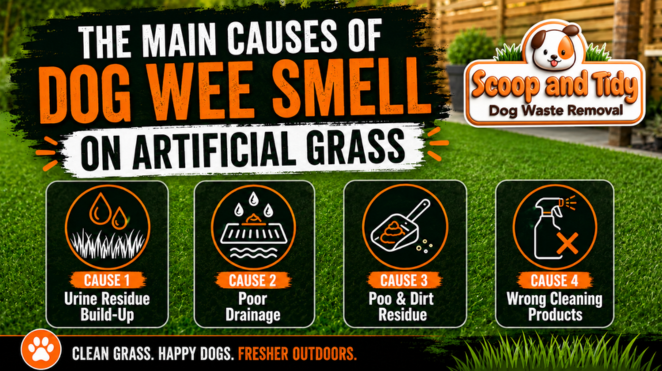
The Main Causes of Dog Wee Smell on Artificial Grass
1. Urine Residue Build-Up
The most common cause is old urine residue. Even when the grass looks clean, microscopic urine particles can remain in the fibres or underneath the surface.
Over time, this residue becomes more concentrated, especially in areas your dog uses again and again.
2. Poor Drainage
Artificial grass needs good drainage. If urine cannot drain away properly, it may sit below the surface and continue to smell.
This can happen if the grass was not installed correctly, the base layer is too compacted, or the garden has low spots where liquid collects. If water pools when you rinse the grass, urine may also be collecting there.
Dog hair, leaves, mud, and other debris can also make drainage worse over time. When hair builds up in the grass fibres or settles into the surface, it can slow down how well water and urine drain through the artificial grass.
3. Surface Dirt and Poo Residue
Dog poo can also contribute to odour, even after it has been picked up. Small traces can remain on artificial grass or paving, especially if the waste has been left sitting for a while.
When poo residue mixes with urine, dirt, and warm weather, the garden can start to smell even if it looks reasonably clean.
4. Cleaning with the Wrong Products
Some cleaners only mask the smell with fragrance. Others may not be suitable for pets or artificial grass.
This is why the smell often returns a few days after cleaning. The surface may smell fresh temporarily, but the source of the odour has not been properly broken down.
Why Water Alone Often Does Not Work
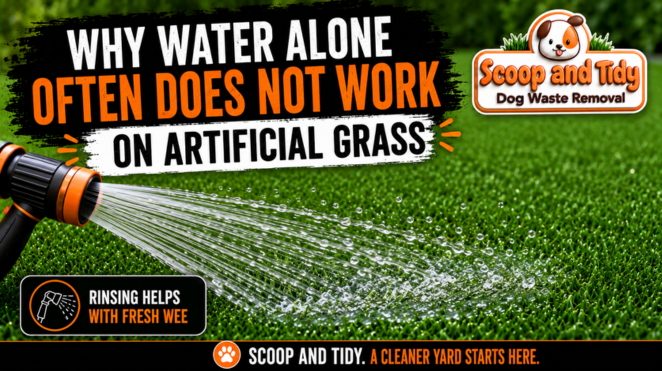
Rinsing artificial grass with water is useful, especially after fresh urine. It helps dilute the wee and wash some of it through the surface.
However, water alone may not remove older urine residue. Dog urine contains compounds that can cling to surfaces and form uric acid crystals. These crystals can remain behind after rinsing, which is one reason the smell keeps coming back.
This is where enzyme cleaners can help. Instead of just covering the smell, enzymes break down the organic matter in urine so it can be cleaned away more effectively.
For best results, use a pet-safe enzyme cleaner or sanitiser that is suitable for artificial grass and outdoor pet areas.
How to Fix Dog Wee Smell on Artificial Grass
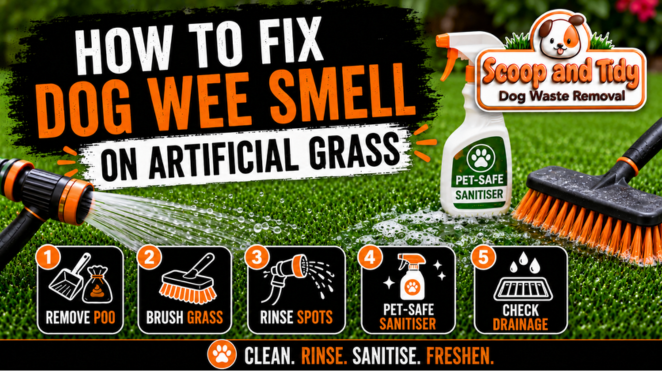
1. Remove Dog Poo First
Before treating urine smell, remove any dog poo from the garden. This stops additional odour from building up and makes the cleaning process more effective.
If poo has been sitting on artificial grass or paving, rinse and sanitise the area afterwards to deal with any residue left behind.
2. Brush the Artificial Grass
Brushing helps lift the fibres and loosen trapped dirt, hair, and residue. This makes rinsing and sanitising more effective.
Use a suitable outdoor brush and avoid anything too harsh that could damage the artificial grass.
3. Rinse the Problem Areas
Use water to rinse the areas your dog uses most often. This is especially helpful for fresh urine and should be done more often during warmer months.
Focus on the main toilet spots rather than soaking the entire garden every time. Most of the smell usually comes from a few high-use areas.
4. Apply a Pet-Safe Enzyme Cleaner and/or Sanitiser
For stronger smells, use a cleaner designed for dog urine, artificial grass, or outdoor pet areas.
Spray or apply it to the affected area and allow it enough contact time to work. Always follow the instructions on the product label, and make sure it is safe for pets before letting your dog back onto the area.
Avoid bleach, ammonia-based cleaners, boiling water, or harsh disinfectants that are not marked as pet-safe.
5. Check for Drainage Issues
If the smell comes back very quickly after cleaning, drainage may be the issue.
A simple test is to rinse the area and watch how quickly the water drains. If it sits on the surface or forms puddles, urine may also be collecting underneath. In that case, the artificial grass installation or base layer may need to be checked.
How Often Should You Clean Artificial Grass If You Have Dogs?
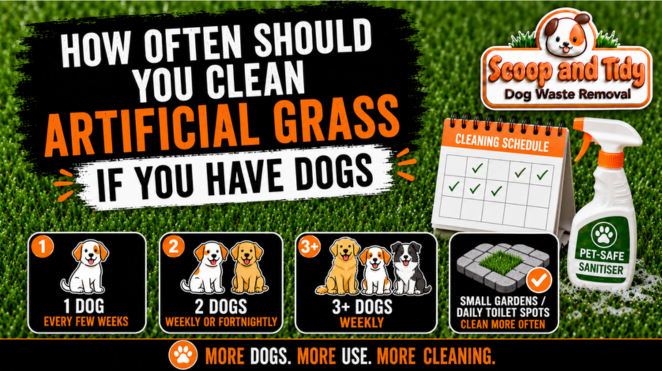
How often you should clean artificial grass depends on the number of dogs, the size of your garden, and how often your dog uses it as a toilet.
For one dog, regular rinsing and a deeper clean every few months may be enough. For two dogs, weekly or fortnightly sanitising is often more suitable. For three or more dogs, small gardens, or areas used daily as a toilet spot, seasonal deep clean (typically March, June and September) with weekly odour treatment top-up is usually the better option.
Artificial grass and paved gardens often need more regular sanitising than natural grass because urine does not absorb into soil in the same way.
Can Dog Wee Smell Be Removed Completely?
In many cases, dog wee smell on artificial grass can be significantly reduced with proper cleaning, rinsing, and pet-safe sanitising.
However, if urine has been soaking into the base layer for a long time, it can be harder to remove completely without dealing with the drainage underneath.
The earlier you treat the smell, the easier it is to control.
How to Keep Artificial Grass Fresh When You Have Dogs
The best approach is a simple routine: pick up dog poo regularly, rinse your dog’s favourite wee spots, use a pet-safe sanitiser when needed, and deep clean a few times a year.
If you stay consistent, you can reduce odours before they become a bigger problem.
When to Get Help?
You may want professional help if the smell keeps coming back, you have more than one dog, your garden smells worse in warm weather, or you simply do not have time to keep on top of it.
This is especially useful before guests visit, children play outside, or you want your garden fresh again without doing the messy work yourself.
Need Help with Dog Wee or Dog Poo Smell on Artificial Grass?
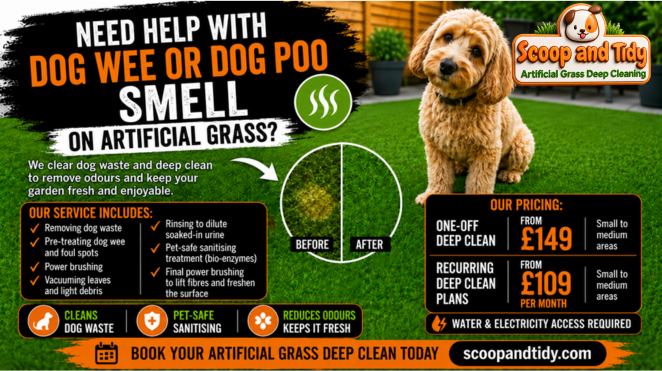
If your artificial grass smells of dog wee or poo and you do not want to deal with it yourself, Scoop and Tidy can help.
We provide professional garden dog waste removal and cleaning across South West London and Surrey, helping busy dog owners keep their outdoor space cleaner, fresher, and easier to enjoy..
Our regular service includes clearing dog poo from your garden and sanitising artificial grass, patios, and paved areas with pet-safe sanitiser to help reduce unpleasant odours.
For artificial grass that needs a more thorough clean, we offer a premium deep clean odour reduction and sanitising service. This includes:
removing dog waste,
pre-treating dog wee and foul spots,
power brushing the artificial grass,
vacuuming the leaves and light debris,
rinsing the area to help dilute the soaked-in urine,
followed by a general pet-safe sanitising treatment - based on bio-enzymes (safe for artificial grass, pets and kids),
and finishing with a final power brushing of the grass to help lift the fibres and freshen the surface.
Our artificial grass deep clean pricing:
One-off artificial grass deep cleans start from £149 for small to medium areas (up to 40m²).
Recurring deep clean plans start from £109 per visit for seasonal deep cleans of small to medium areas (up to 40m²) - helping keep your artificial grass last longer, look and feel fresher and reducing odour build-up over time.
We just need access to your water and electricity - we bring our own specialised equipment and pet-safe products.
It is ideal for busy dog owners, families, multi-dog households, and anyone who wants a cleaner garden without dealing with the mess themselves.
Book your 'artificial grass deep clean' today at https://scoopandtidy.com/artificial-grass-deepclean
Remember: We scoop the poop, so you don’t have to.


