Poop Talks: What Your Dog’s Poo Says About Their Health (UK Guide)
Poop Talks: What Your Dog’s Poo Says About Their Health (UK Guide)
By Patrick Van Hauwe - Scoop and Tidy
What Does Healthy Dog Poop Look Like?
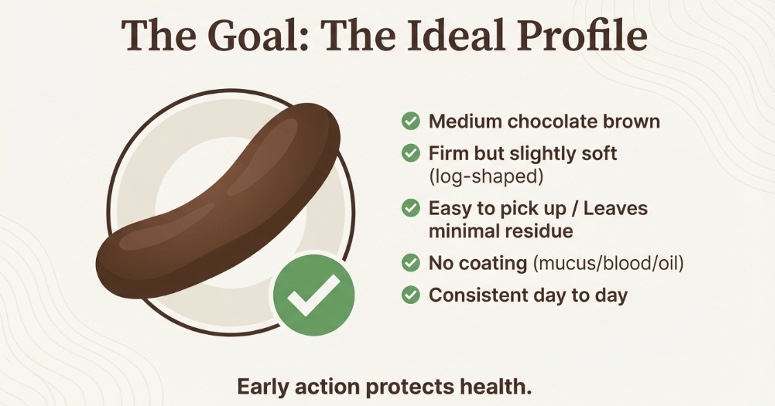
Healthy dog poop should be:
Medium chocolate brown
Firm but slightly soft (log-shaped)
Easy to pick up
Free from mucus, blood or oily coating
Consistent from day to day
Sudden or persistent changes in colour, consistency, content or coating can signal dehydration, dietary intolerance, parasites or more serious digestive issues.
Monitoring your dog’s stool is one of the simplest at-home health checks available.

The Four C’s of Healthy Dog Poop
Veterinary professionals assess stool health using four key indicators:
Colour • Consistency • Content • Coating
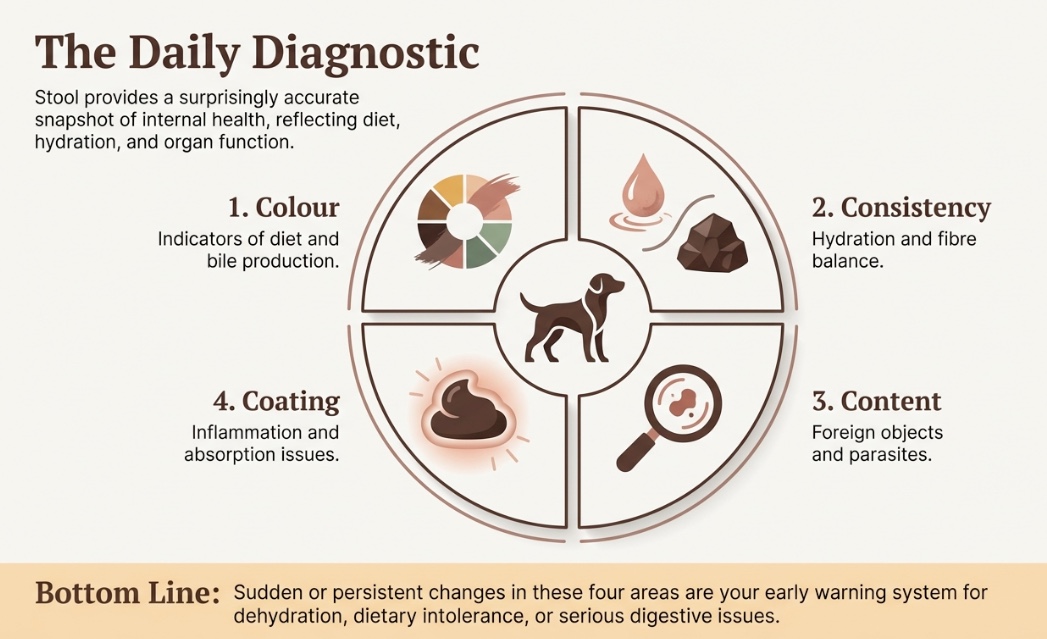
Together, these provide a surprisingly accurate snapshot of digestive health.
1. Colour: What Does Dog Poop Colour Mean?
Colour is influenced by:
Diet
Bile production (liver and gallbladder function)
Digestive speed
Internal bleeding

🟤 Brown (Ideal)
Medium to dark chocolate brown indicates:
✔ Balanced digestion
✔ Proper bile production
✔ Normal gut function
This is the goal.
Unlike these critical colour warnings:

⚫ Black / Tar-like (Melaena)
Black stool may indicate digested blood from the upper digestive tract.
Possible causes include:
Stomach ulcers
Internal bleeding
Reaction to medication
Toxin ingestion
🚨 This requires urgent veterinary attention.
🔴 Fresh Red Blood
Usually linked to:
Colitis
Straining
Minor rectal tears
Parasites
While often less urgent than black stool, it should always be checked.
2. Consistency: The Goldilocks Rule
Consistency reflects:
Hydration
Fibre balance
Gut bacteria health
Digestive speed
Veterinarians often use a 1–7 stool scale. For everyday checks, this simplified 5-scale guide works well.
Stool Consistency Guide
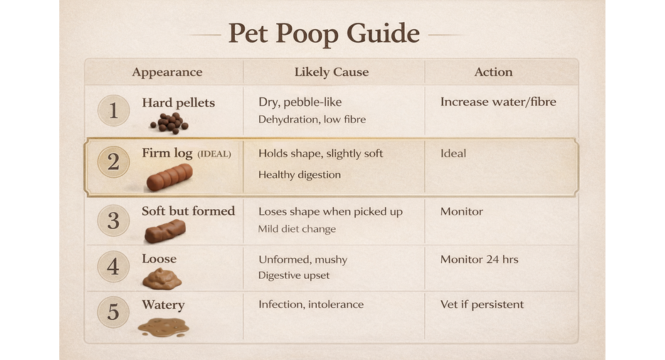
Ideal Stool
A firm log that:
✔ Holds its shape
✔ Is easy to pick up
✔ Leaves minimal residue
This suggests good hydration and a balanced gut microbiome.
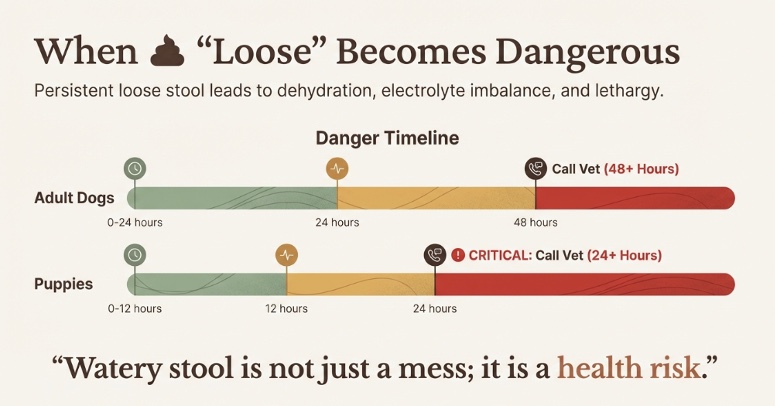
Diarrhoea Risks
Persistent loose stool can lead to:
Dehydration
Electrolyte imbalance
Lethargy
If diarrhoea lasts:
More than 24–48 hours in adult dogs
More than 12–24 hours in puppies
Contact your vet.
3. Content: What Shouldn't Be There?
A quick glance at stool content can reveal important health clues.
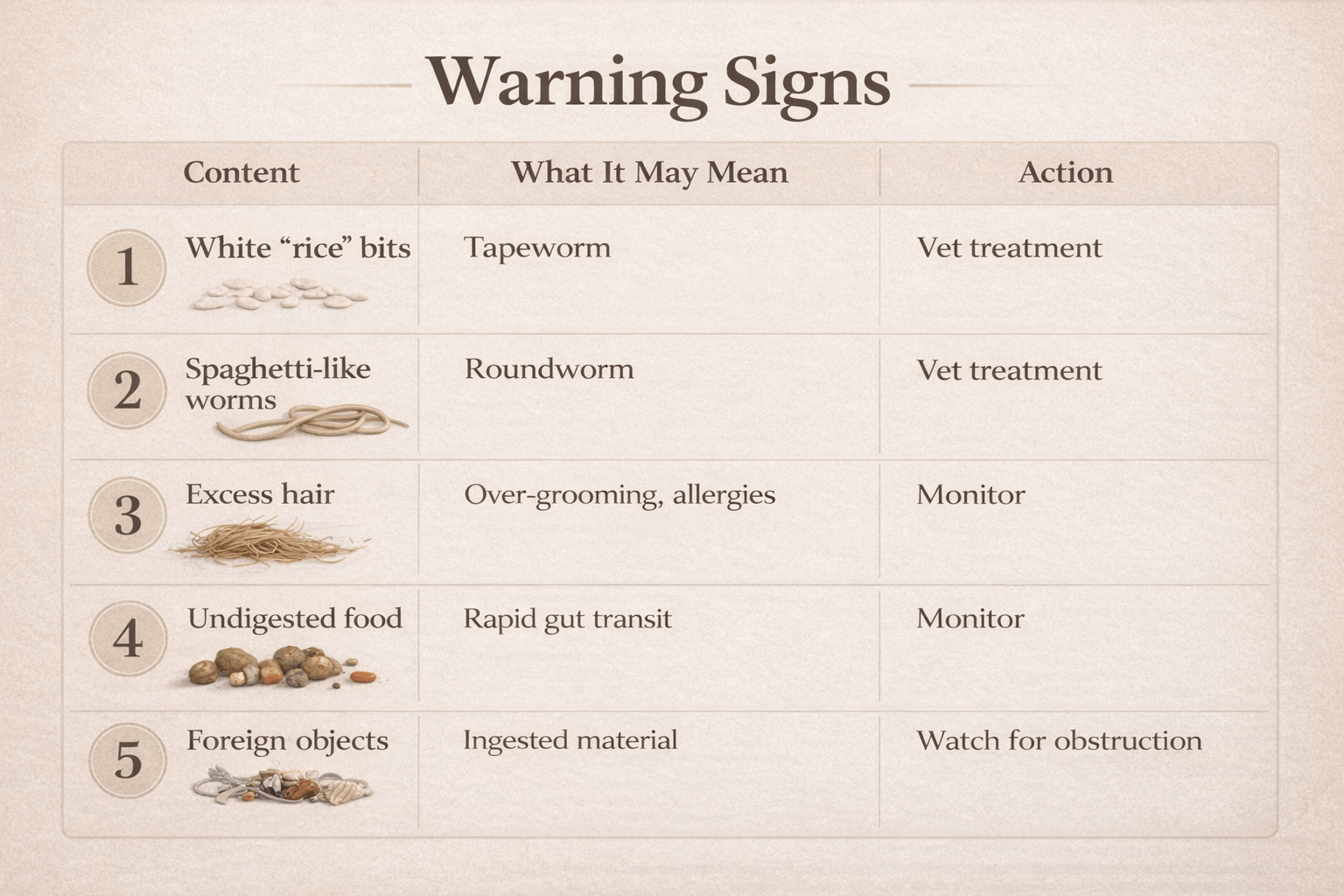
Worms
Even well-cared-for UK dogs can pick up worms from:
Parks
Slugs/snails
Soil
Other animals
Regular vet-approved worming is important.
Foreign Objects
If you see toy fragments, grass, or fabric:
Monitor for:
Vomiting
Refusal to eat
Lethargy
Abdominal discomfort
These can indicate obstruction.
4. Coating: The Surface Clues
Healthy stool should not have a visible coating.
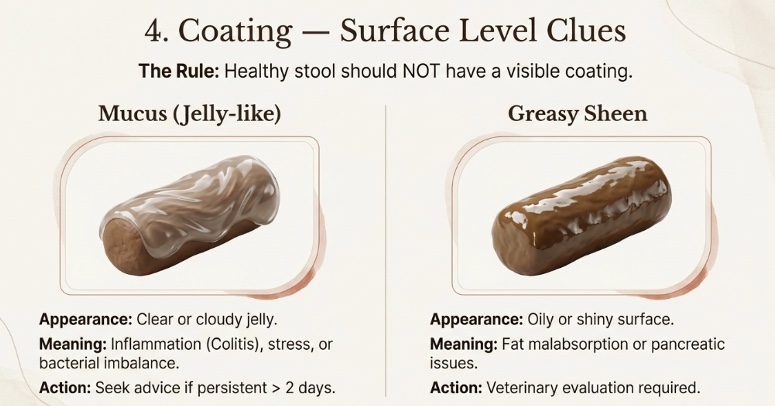
A coating usually suggests irritation of the intestinal lining.
Mucus
Clear or cloudy jelly-like coating can indicate:
Stress
Sudden diet change
Mild colitis
Bacterial imbalance
If persistent beyond a couple of days, seek advice.
Greasy / Oily Stool
May indicate:
Pancreatic issues
Fat malabsorption
Poor nutrient digestion
Repeated pale, bulky, greasy stool requires veterinary evaluation.
5. Why Patterns Matter More Than One-Off Changes
Dogs can occasionally have soft stool.
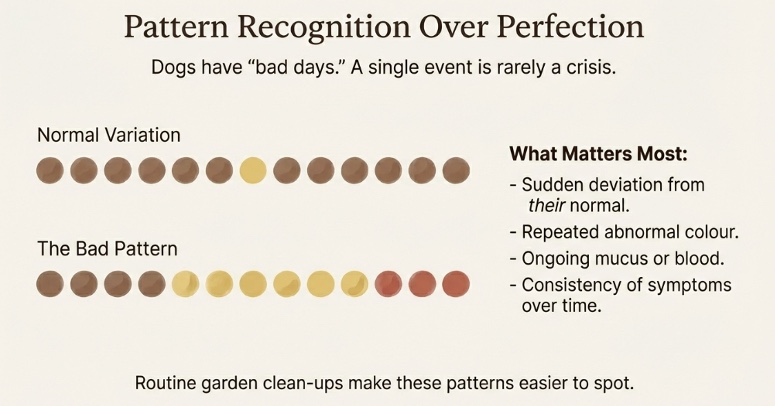
What matters most is:
Sudden change from their normal pattern
Repeated abnormal colour
Ongoing mucus or blood
Persistent diarrhoea
Consistency over time is key.
This is one reason regular garden clean-ups make patterns easier to notice.
5. How Scoop and Tidy Helps
As a professional dog waste removal service covering Carshalton, Sutton and surrounding areas, we see consistency patterns week after week.
If something looks noticeably different from your dog’s normal pattern, we can discreetly mention it so you can monitor or seek advice.
We’re not vets — but regular observation catches changes early.
And early action protects health.
Important Disclaimer
This article is for educational purposes only and is not a substitute for professional veterinary advice.


