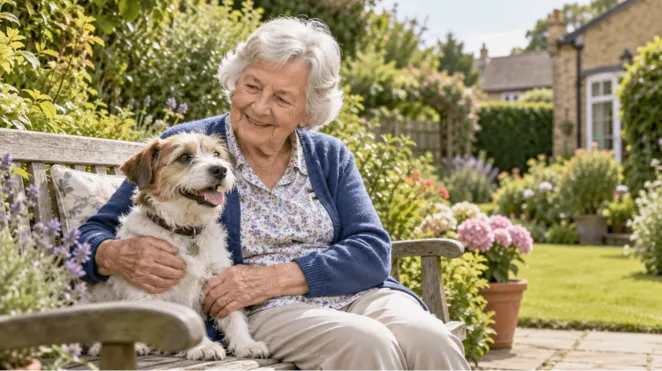
Helping Elderly Parents Care for Their Dogs: 6 Tips
Helping Elderly Parents Care for Their Dog: Keeping the Companionship Without the Strain
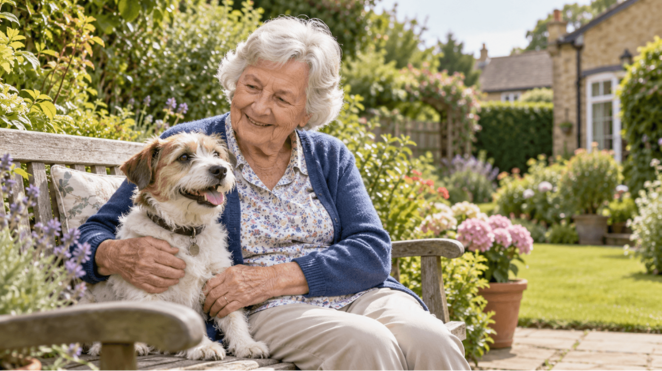
Practical ways to support older dog owners while protecting their independence, wellbeing and quality of life.
For many older people, a dog is much more than a pet. They're a loyal companion, a reason to get up in the morning and often an important source of comfort, especially for those living alone.
But as our parents get older, some of the everyday responsibilities of dog ownership can become more challenging.
Walking the dog, bending down to pick up dog poo, keeping the garden tidy or getting to veterinary appointments may become difficult due to arthritis, reduced mobility, balance problems or other health conditions.
For family members, this can create a difficult balancing act: How do you help an elderly parent continue enjoying their beloved dog without compromising their safety or independence?
The good news is that there are practical ways to make dog ownership more manageable, without taking away the companionship that means so much.
Why Dogs Can Be So Important to Older People
The benefits of pet ownership go far beyond having an animal around the house.
Research from the veterinary charity PDSA highlights just how valuable dogs can be to their owners. According to its 2024 PAW Report, 92% of dog owners said owning a dog improves their life, while 88% believed their dog positively affects their mental health and 86% felt dog ownership makes them physically healthier. Source: PDSA – PAW Report 2024
For many elderly dog owners, their pet provides:
Companionship: A comforting presence that can help reduce feelings of loneliness and isolation.
Daily routine: Feeding, caring for and spending time with a dog gives structure and purpose to the day.
Gentle physical activity: Suitable walks and playtime can encourage movement and time outdoors.
Social interaction: Dogs can create opportunities to chat with neighbours and other dog owners.
Emotional wellbeing: The affection and companionship of a much-loved pet can be reassuring during difficult periods.
Age UK has highlighted the importance of helping older people keep their pets, particularly when changing health or personal circumstances make pet care more challenging.
However, it's worth remembering that dog ownership isn't automatically beneficial in every situation. The demands of caring for a pet can also create physical strain, anxiety or financial pressure.
The goal should be to preserve the benefits of companionship while finding realistic ways to manage the responsibilities.
When Everyday Dog Care Starts Becoming Difficult
Changes in mobility or physical health can happen gradually, which means families might not immediately notice that their parent is struggling.
Some common challenges include:
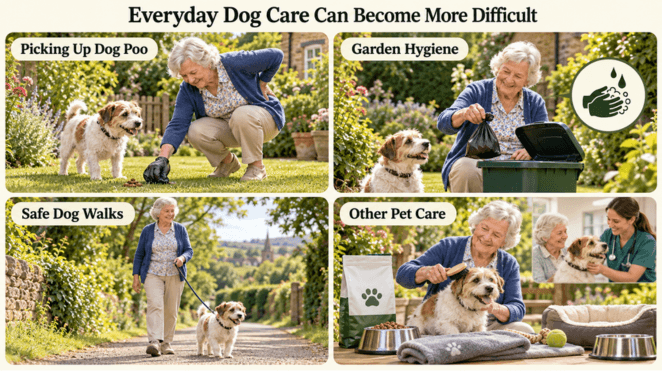
1. Bending Down to Pick Up Dog Poo
Cleaning up after a dog is a necessary part of responsible pet ownership, but it can become surprisingly difficult for someone with stiff joints, back pain, arthritis or poor balance.
Repeatedly bending or crouching in the garden may cause discomfort and, for some people, increase the risk of falling.
This can become particularly challenging during wet or cold weather when grass and patios are slippery.
Falls are an important consideration for older adults. According to NHS guidance, approximately 1 in 3 adults over the age of 65 who live at home will experience at least one fall each year.
For someone already experiencing balance problems or reduced mobility, repeatedly bending down to collect dog poo, particularly on wet or uneven ground, may create additional difficulties.
This is one reason why long-handled tools, assistance from family members or professional garden dog waste removal services can be worth considering.
Source: NHS – Falls Prevention Service
The NHS recommends reducing unnecessary bending and seeking help with tasks that cannot be carried out safely.
2. Keeping the Garden Clean and Hygienic
For older dog owners with a private garden, regularly removing dog waste can be difficult, particularly when their dog uses the garden several times a day.
Unfortunately, leaving dog poo to accumulate isn't ideal.
Dog faeces can contain parasites and other potentially harmful microorganisms. One example is Toxocara, a roundworm that can cause toxocariasis, although human infection is rare.
According to the NHS, prompt dog waste removal, handwashing and regular veterinary worming advice are sensible precautions.
There is also a practical consideration: dogs may step in waste and carry contamination indoors on their paws.
Regular garden cleaning helps maintain a more pleasant outdoor space for both the owner and their pet.
3. Walking the Dog Safely
Daily walks can be beneficial for both dogs and their owners, but not every older person can comfortably manage them.
An energetic dog that pulls on the lead may be difficult to control for someone with reduced strength or balance.
Uneven pavements, slippery paths and longer walks can also create challenges.
That doesn't necessarily mean the older person needs to stop walking their dog completely.
Shorter walks, quieter routes, appropriate walking aids or occasional assistance from family members and professional dog walkers may help.
4. Managing Other Pet Care Responsibilities
Other tasks that can become difficult include:
Carrying heavy bags of dog food.
Bathing or grooming a dog.
Cleaning feeding areas and bedding.
Transporting pets to veterinary appointments.
Maintaining lawns and outdoor spaces.
Individually, these may seem like small chores. Together, however, they can become physically and emotionally demanding.
6 Practical Ways to Help Elderly Parents Continue Enjoying Their Dogs
Fortunately, supporting an older dog owner doesn't always require major changes.
Often, small adjustments can make a meaningful difference.
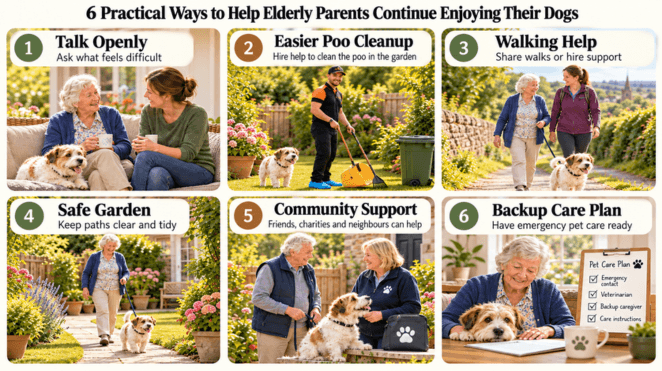
1. Have an Open Conversation About What They Find Difficult
Before arranging help, start by asking your parent which tasks they find challenging.
Some older people may hesitate to admit they're struggling because they worry about losing their independence or even being asked to give up their pet.
A supportive conversation can help identify the specific areas where assistance would genuinely be useful.
Rather than taking over, involve them in deciding what support feels right.
2. Make Dog Waste Cleaning Easier
If bending down to collect dog poo is becoming uncomfortable, consider alternatives.
Long-handled pooper scoopers can reduce the need to bend, although they may not be suitable for everyone, particularly those with balance difficulties.
Family members may be able to help with regular garden clean-ups.
Another option is a professional dog waste removal service, sometimes called a dog poo cleaning or pooper scooper service such as 'Scoop and Tidy'.
These services visit at agreed intervals to collect and dispose of dog waste, allowing the owner to enjoy their garden without repeatedly bending down.
For families who don't live nearby or cannot visit regularly, this can provide some practical reassurance.
3. Consider Occasional Dog Walking Assistance
If your parent still enjoys walking their dog but finds longer walks tiring, you could explore:
Sharing walking responsibilities with family members.
Asking a trusted neighbour for occasional assistance.
Hiring a professional dog walker for longer outings.
Adjusting the walking routine to suit their physical abilities.
The aim is to help your parent remain active where it is safe and enjoyable, while ensuring their dog receives appropriate exercise.
4. Keep the Garden Safe and Manageable
A clean, accessible garden can make a real difference to an elderly dog owner.
Consider whether the outdoor space has:
Clear, unobstructed pathways.
Slippery or uneven paving.
Overgrown grass or vegetation.
Accumulated dog waste or fallen leaves.
Suitable outdoor lighting.
Some families arrange occasional gardening, lawn mowing or patio cleaning to help keep outdoor spaces manageable.
Where dogs regularly use patios or artificial grass, appropriate pet-safe cleaning and deodorising may also be helpful.
Always follow the product manufacturer's instructions and keep pets away from treated surfaces until it is safe for them to return.
5. Explore Community and Charitable Support
Professional services aren't the only option.
Some local charities and community organisations offer practical support to older pet owners.
For example, Age UK York's Keep Your Pet service has helped older people with tasks such as dog walking, veterinary visits and temporary pet care.
Availability varies by area, but it may be worth checking with local Age UK organisations, community groups or animal welfare charities.
Neighbours, friends and trusted volunteers may also be able to lend a hand.
6. Create a Simple Backup Pet Care Plan
One often-overlooked consideration is what happens if an elderly dog owner becomes temporarily unwell or needs to go into hospital.
Having a basic plan can reduce unnecessary worry.
It can include:
Who can feed and walk the dog in an emergency.
Contact details for the vet.
Medication, feeding and exercise instructions.
An agreed temporary carer if the owner is hospitalised.
Information about any regular dog care services.
Knowing their pet will be looked after can provide valuable peace of mind.
Finding the Right Balance Between Help and Independence
One of the most important aspects of supporting elderly parents is respecting their independence.
Not everyone wants or needs help with the same things.
Some older people may be perfectly capable of walking their dog but find bending down in the garden painful. Others may be comfortable managing indoor pet care but struggle with outdoor maintenance.
It's important not to assume that age alone means someone cannot look after their pet.
Where possible, encourage older people to continue doing the activities they enjoy and can manage safely.
Support should focus on removing unnecessary strain, not removing independence.
How Family Members Can Help When They Don't Live Nearby
For adult children living some distance from their parents, providing practical help can be particularly challenging.
You might visit regularly, but work commitments, childcare and other responsibilities can make it difficult to keep up with every household task.
A simple approach is to identify which activities need daily attention, which can be managed weekly and which are better handled by someone local.
For example, your parent might continue feeding and spending time with their dog, while a local dog walker assists with exercise and a garden maintenance service helps with outdoor cleaning.
A combination of family support, community help and occasional professional services can make pet ownership more manageable without placing all the responsibility on one person.
When Might Professional Dog Waste Removal Be Helpful?
For some households, regular professional garden dog waste cleaning can be a useful part of a wider support plan.
It may be particularly helpful when:
An older dog owner struggles to bend, crouch or maintain their balance.
Arthritis or back problems make garden cleaning painful.
Family members are unable to visit regularly.
A dog uses the garden frequently.
Maintaining a clean outdoor space has become difficult.
Services typically offer twice-weekly, weekly, fortnightly, monthly or occasional visits, depending on the person's needs and pet-safe sanitising & deodorising services of any paved areas or artificial grass.
Supporting Older Dog Owners in Sutton and Surrounding Areas
At Scoop and Tidy, a local dog waste removal service based in Carshalton, we understand that some older dog owners need a little extra assistance with maintaining their gardens.
We help people who find dog waste removal physically difficult, as well as families who want to make everyday pet care more manageable for their loved ones.
Our services include regular garden dog waste removal, optional pet-safe sanitising for suitable outdoor surfaces and seasonal lawn mowing.
We cover Sutton, Carshalton, Wallington, Croydon and selected surrounding areas in South West London and Surrey.
If garden cleaning has become one of the challenges your parent faces, you can learn more about our services at scoopandtidy.com.
Of course, professional assistance is just one possible solution. The right approach will depend on each person's health, preferences, circumstances and support network.
Final Thoughts: Sometimes Small Changes Make the Biggest Difference
Helping an elderly parent continue caring for their dog isn't about taking away responsibilities or questioning their ability to remain independent.
It's about recognising when certain tasks are becoming difficult and finding practical, respectful ways to help.
For some families, that might mean sharing dog walking duties. For others, it could involve arranging help with gardening, cleaning or veterinary appointments.
And for many older people, removing just one physically demanding chore can make daily life noticeably more comfortable.
Because growing older shouldn't automatically mean giving up the companionship of a beloved dog. With the right support, many people can continue enjoying that special relationship for years to come.
Frequently Asked Questions
Can elderly people continue owning dogs if they have mobility issues?
Yes. Many older people with mobility difficulties can continue caring for their dogs with suitable adjustments or assistance. The important considerations are the owner's safety, the dog's welfare and whether everyday care needs can be met consistently.
How can I help my elderly parent who struggles to pick up dog poo?
Options include long-handled collection tools, help from family members or a professional dog waste removal service such as 'Scoop and Tidy'. If balance or mobility is a concern, avoid encouraging tasks that could increase the risk of falling.
How often should dog poo be removed from a garden?
Ideally, dog poo should be collected as soon as possible, preferably daily. Prompt removal helps maintain garden hygiene and reduces opportunities for contamination. Professional weekly or fortnightly visits can provide additional support but should not be considered a complete replacement for timely waste collection.
Are dogs good companions for elderly people living alone?
Dogs can provide valuable companionship, daily structure and opportunities for physical activity and social interaction. However, the benefits should be balanced against the physical, emotional and financial responsibilities of pet ownership.
What support is available for elderly dog owners in the UK?
Support may be available through family members, friends, local community groups, charities, dog walkers, pet sitters and specialist services such as dog waste removal or garden maintenance. Availability varies depending on location.


